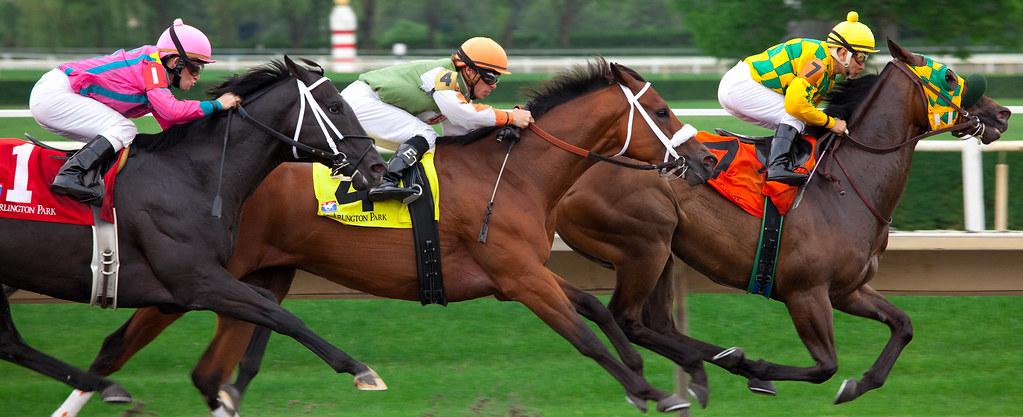
Melbourne Cup vs. Cox Plate: Which Would You Choose For Your Star Horse?

Ask any casual racing fan to name the most prestigious horse racing event in Australia, and they’d almost certainly say the Melbourne Cup. And with good reason, too, as it’s not just the most famous racing event from Australia – it is one of the world’s greatest sporting and cultural events.

But the showcase at the most famous Australian horse racing racecourse, Flemington Park, does have competition from other events. These include the new super-rich events like The Everest, which carries one of the world’s largest racing purses.

And yet, there is also some debate as to whether the W.S. Cox Plate is the superior race. Yes, the Melbourne Cup is the one that brings the nation together, and the one that gets all the international attention. But for racing purists, and that means many trainers and jockeys, the one they want to win is the Cox Plate.

Both races steeped in history

The Cox Plate is in its 100th year in 2022, whereas the Melbourne Cup has been held since 1861. So, it’s fair to say that both races are steeped in history. Both offer huge financial incentives to owners, but the Melbourne Cup has the bigger purse at $AUD 8 million, whereas the Cox Plate offers $AUD 5 million (still a huge amount).

Nonetheless, we aren’t talking about history, money, or even prestige here, it’s more about the mechanics of the race. And some feel that the slog of the big handicaps like the Melbourne Cup becomes something like a war of attrition, not necessarily rewarding the best horse in the race due to the handicap system.

In contrast, the Cox Plate, with its shorter distance and ‘weight for age’ system is more of a fair system in the eyes of some racing fans. Horses will carry some weight because of their age, but it’s not like the handicap system where the best horses are punished to carry the most weight due to their perceived excellence. The Cox Plate has a better record of favourites winning, and it’s clear punters enjoy that element.

Everyone will have their personal favourite

Of course, some of this comes down to the question of handicaps versus other races. Detractors believe that forcing the best horses to carry heavier weights is the equivalent of asking a Real Madrid to play a football match with nine men against a team of 11 just because the Spanish team has had more success. Proponents of handicaps, however, believe that it’s simply part of the contest. Indeed, many punters enjoy their battle of wits against the handicapper.

We might ask – why not try to win both the Cox Plate and Melbourne Cup? Despite the close proximity of the two race dates, it has been done in the past – seven times, in fact. Most recently, the double has been achieved by Makybe Diva (2005).

But the demands of modern racing – and welfare concerns – mean that fewer elite horses are trying to achieve the double. Verry Elleegant entered both in 2021, coming 3rd in the Cox Plate and winning the Melbourne Cup. So it is still very possible.

It’s always going to be a subjective opinion to say one is better than the other. And every jockey, trainer, owner and, indeed, punter is going to have their favourite. Maybe it’s the Melbourne Cup or the Cox Plate; perhaps it’s the All-Star Mile or the Caulfield Cup. Racing is a broad church, consisting of multiple disciplines; claiming one is the best is akin to claiming there is a best Olympic sport. And any horse with a Cox Plate or Melbourne Cup on its resume is going to be a special horse indeed – regardless of which one they win.

Where to find the most sought-after offers for Cheltenham day four betting

Everyone knows that the annual Cheltenham Festival every March has lots of top-drawer racing action to savour each day that it runs. This is certainly true for day four, which hosts arguably the biggest race of the entire week to bet on. This comes in the form of the historic Gold Cup and provides the ideal climax to a sensational week of National Hunt thrills.

Although it is known to horse racing fans as Gold Cup day, the final day of Cheltenham is not just about this Grade 1 contest – there are also other well-known races, such as the Albert Bartlett Novices’ Hurdle and the Triumph Hurdle, to have a flutter on. To get the most from betting on day four of Cheltenham, though, a good tip is that you should track down the most sought-after bookmakers’ offers.

These enable bettors to have even more fun when getting involved with the festival, and have more cash to bet on races with. But what are the best Cheltenham day four betting offers to know about?

Sky Bet – £30 in free bets for Cheltenham

Free bet offers are the most widely seen and highly-prized promos that bookies run for big events in horse racing events such as the Cheltenham Festival 2024. Sky Bet is a case in point and certainly has one of the most eye-catching promotions to use for betting on day four of this meet.

This sees a huge £30 in free Cheltenham bets up for grabs when you create a Sky Bet account as a new customer. The free bets are credited as 3 x £10 bet tokens, which can be used on races that are run during the final day of the festival.

As with most other bookies covering the festival, Sky Bet is also known to have regular ongoing promos for existing customers to use on day four of the action. This often includes deals such as price boosts for the biggest races, or on big-name horses running in a particular day four contest.

bet365 – Bet £10 on Cheltenham and get £30 in free bets

bet365 is one of the most famous, trusted and reliable sports betting firms in the UK. It is also well-known for covering each day of the Cheltenham Festival, offering competitive odds on races and having lots of markets to check out. If you are searching for the best betting offers for day four of this event, it rates highly.

New customers have the chance to net a cool £30 in free bets for this day of the festival, when they first bet £10. Once an eligible £10 qualifying bet has been made, the £30 in free bets will be credited to your account to use on top races like the Cheltenham Gold Cup. A good tip with this offer is putting the qualifying bet on the first race of day four at Cheltenham, so you get the free bets to use on the rest of the day’s racing.

talkSPORT BET – Get £30 in free bets for Cheltenham

It is common to see the best Cheltenham day four promotions come from the biggest names around. talkSPORT BET is a case in point and shares a brand with the UK’s top sports radio station. It is a place that not only treats customers fairly and offers excellent support but also focuses on using the latest online security measures to protect your sensitive data.

This platform also has a sensational Cheltenham day four betting offer that is open to brand new customers. This sees £30 in free bets up for grabs to use during the festival, once you have opted in and first placed an eligible £10 qualifying bet on any sport. Once this has been done, you will receive 3 x £10 bets to make the most of day four betting with. It is important to note that this offer is only available with card and Apple Pay payments.

BetVictor Sports – Bet £20 and get £40 in free Cheltenham bets

All sports betting fans in the UK will know the BetVictor Sports brand – it is another iconic company offering awesome extras for Cheltenham 2024. Its main promotion is for new customers and offers £40 in free bets to use at the festival once you have opened a new account and placed an eligible £20 qualifying wager within seven days. Once the qualifying wager is settled, the £40 will be yours to use on races such as the Triumph Hurdle or the Mares’ Steeple Chase.

BetVictor is also likely to fall in line with other sportsbooks covering Cheltenham, and run specific offers for existing customers to grab on day four of the action. This could be anything from free bets to daily doubles, accumulators and more, so keep an eye out.

Ladbrokes – Bet £5 and get £20 in free bets

Although not a dedicated Cheltenham deal per se, Ladbrokes’ “bet £5 and get £20 in free bets” promo is perfect for getting more from betting on day four of the festival. Open to new customers from the UK and Ireland, placing an eligible qualifying wager of £5 within 14 days of opening an account sees 4 x £5 free bets credited for your use.

As long as you make your qualifying bet in time for Cheltenham day four, you will have the £20 in free bets ready to use on your selections for the day. Although the free bets are only valid on certain markets and expire after seven days, this remains one of the favourite promos for the final day of Cheltenham racing action.

Top offers for Cheltenham day four betting

Those discussed here are without doubt the most sought-after promotions to use for betting on day four of the upcoming Cheltenham Festival. All of the offers we have looked at not only come from some of the most trusted names in horse race betting but also enable punters to get the maximum benefit from wagering on the final day of this event.

The Grand National versus the Cheltenham Gold Cup – Where Do You Stand?

Over March and April each year the two most significant races in the National Hunt calendar take place, namely the Cheltenham Gold Cup and the Grand National.

The Grand National alone takes around £300m in bets each year and it is estimated that the Cheltenham festival (which includes the Gold Cup as it’s feature race) hits the £500m. The prize money alone for the two races is over £1.6 million. Take a look at the best betting offers for the Aintree Grand National so you can have a punt yourself.

There is one sure-fire way to tell the difference between a horse racing aficionado and someone who is not (without possessing some kind of Derren Brown style extrasensory perception) – ask them which of these two races they like the most.

A purist of the Sport of Kings is far more likely to opt for the Gold Cup, the person on the street will just as likely gravitate towards the National.

Why is this though?

As somebody who has been passionately following horse racing for almost half a century, I will try to explain the psychology!

The Grand National – A Quick Synopsis

There is no doubt that the Grand National is a grand spectacle. When I watch the 40 horses start the gallop towards that first fence each year at Aintree, I must admit that it never once fails to give me goosebumps.

It’s a steeplechase marathon, which is always full of stories behind the contenders that are waiting to be etched into history forever.  Additionally, the actual race itself is very rarely uneventful.

It’s a national institution, a long running staple of not only the sporting calendar, (it attracts a sizable worldwide audience) but it is a quintessential part of British life itself. So much so, that if Dame Judy Dench or Sir Trevor McDonald embodied a horse race, it would probably be this one.

However, it is also a handicap. So, what, you say? Well, it means it has a mixed bunch of entrants with varying ability and that the best horse probably doesn’t come out on top that often (there are notable exceptions) as they all carry different weights around on their back. The perceived poorer horses are required to carry less of a burden around the track to even out this inferiority (some in fact carry nearly 2 stone less than others).

No other horse has become as synonymous with this race as Red Rum.  Between 1973 – 1977, the slightly framed gelding won it no less than 3 times and was runner-up twice. Over the years his name and achievements have deservedly transcended the sport of horse racing.

The Cheltenham Gold Cup – A Quick Synopsis

The Cheltenham Gold Cup meanwhile, is a race which usually attracts around 15 entrants and each and every horse is treated equally.

It’s a championship Grade 1 race, so there is no hiding place – these are the big boys (and girls).

It’s simply the cream of long-distance chasers competing against each other over a thoroughly relentless and unforgiving 3 miles and 2 furlongs. The Cheltenham course is the ultimate challenge, a supreme test of jumping skill, speed and stamina.

Furthermore, some of the greatest names in horse racing history have competed and won (think about Arkle, Golden Miller and more recently the Denman and Kauto Star rivalry making the front pages of the newspapers.)  They may not be as widespread household names as ‘Rummy’, but they have each made their own indelible marks.

It is often cited as the ‘blue riband’ event of National Hunt racing. So, the human equivalent of the Gold Cup would be Dwayne ‘The Rock’ Johnson or maybe Novak Djokovic.

It also benefits from being part of the Cheltenham festival, where, over the course of 4 days many of the Championship races are run. It is what all of the trainers in the business gear up for during the course of the entire season (all roads lead to Cheltenham).

The Grand National does have an undercard featuring some top-quality racing, but it is not at the same level or prestige as its Cheltenham counterpart.

Concluding thoughts…

Those who follow horse racing and appreciate the very best competing against each other would naturally gravitate to the Cheltenham Gold Cup. The Grand National being an entertaining distraction for them from the endless ups and downs of the jumps season.

On the other hand, the casuals who are more inclined to bet once a year are drawn into the theatre and occasion of a one-off long-distance race featuring a cast of many. They are not too concerned with the fact that some of the competitors are given more favourable conditions than others or that they are not observing a group entirely made of the finest equine specimens that racing has to offer.

The truth is that each showpiece has its place in our hearts and minds, and long may this continue.


Cheltenham Gold Cup

The Cheltenham Gold Cup, run over 3 miles 2½ furlongs and 22 notoriously stiff fences on the New Course at Prestbury Park, is the most valuable conditions, or non-handicap, chase in the British National Hunt calendar, offering £625,000 in prize money. The race was created, in its current guise, by Frederick Cathcart, Clerk of the Course at Cheltenham Racecourse, in 1924. The inaugural running, which was captured by British Pathé News, was won by Red Splash, trained by Major Humphrey Wyndham and ridden by Dick Rees. Interestingly, the original Gold Cup trophy was returned to Cheltenham Racecourse in 2018 and, mounted on a plinth bearing the names of all the winners in the intervening years, is now presented to the winner as a perpetual trophy.


The Cheltenham Gold Cup was transferred from the Old Course to the New Course in 1959 and, in the modern era, has been won by some of the finest steeplechasers in history. Arguably the finest of them all, Arkle, won the Cheltenham Gold Cup three years running in 1964, 1965 and 1966, completing his hat-trick at prohibitive odds of 1/10, making him the shortest-priced winner ever. The only horse since to win the Cheltenham Gold Cup in three consecutive years was Best Mate in 2002, 2003 and 2004, but the roll of honour includes such luminaries as Dawn Run, Desert Orchid and Kauto Star, to name but a few.


In 1983, Yorkshire trainer Michael Dickinson entered the Guinness Book of World Records, not for the first time, by saddling the first five home in the Cheltenham Gold Cup. In order, his so-called ‘Famous Five’ were Bregawn, Captain John, Wayward Lad, Silver Buck and Ashley House. Other notable winners of the Cheltenham Gold Cup include Norton’s Coin, a completely unconsidered 100/1 outsider trained by Carmarthenshire permit holder Sirrell Griffiths, in 1990, Long Run, who set the current course record of 6 minutes 29.5 seconds, in 2011 and, more recently, Al Boum Photo, who provided perennial Irish champion trainer Willie Mullins with his first winner, after six previous runner-up finishes, in 2019.

Goodwood Festival

The Goodwood Festival, traditionally known as ‘Glorious Goodwood’, is a five-day horse racing meeting that is staged annually at Goodwood Racecourse in late July and early August. Situated high on the Sussex Downs, on the southern edge of the South Downs, five miles north of Chichester, Goodwood has been described as ‘the most beautiful racecourse in the world’.


Horse racing was introduced to Goodwood by Charles Lennox, Third Duke of Richmond, in 1802. The initial two-day meeting, staged on a course known as ‘The Harroway’ on the Goodwood Estate, served as a replacement for the annual fixture held by officers of the Sussex Militia at nearby Petworth Park. A more ambitious, three-day fixture, held under Jockey Club Rules followed in 1803 and, in 1814, the fixture was moved to July, where it has remained ever since.


Notwithstanding the suspension of horse racing and the closure of Goodwood Racecourse for the duration of World War II, the Goodwood Festival continued to evolve and increase in popularity for the next two centuries or more. Nowadays, it is one of the highlights of the British racing calendar.

The modern Goodwood Festival features a total of 13 Group, or Pattern, races, of which three – the Sussex Stakes, the Goodwood Cup and the Nassau Stakes – are at the highest, Group One level and form part of the British Champions Series.


The Sussex Stakes, run over a mile, is the feature race on day two and, in fact, the most valuable race of the week, with £1 million in prize money. The Goodwood Cup, run over two miles, is the feature race on day three and, in 2017, was promoted to Group One status, with a corresponding increase in prize money to £500,000. The Nassau Stakes, run over a mile-and-quarter, is the feature race of the fifth, and final day, with £600,000 in prize money. The undisputed betting highlight of the final day, though, is the Stewards’ Cup, a historic handicap run over six furlongs on one of the fastest sprint courses in the country and worth £250,000 in prize money.

1 11 12 13 14 15 19